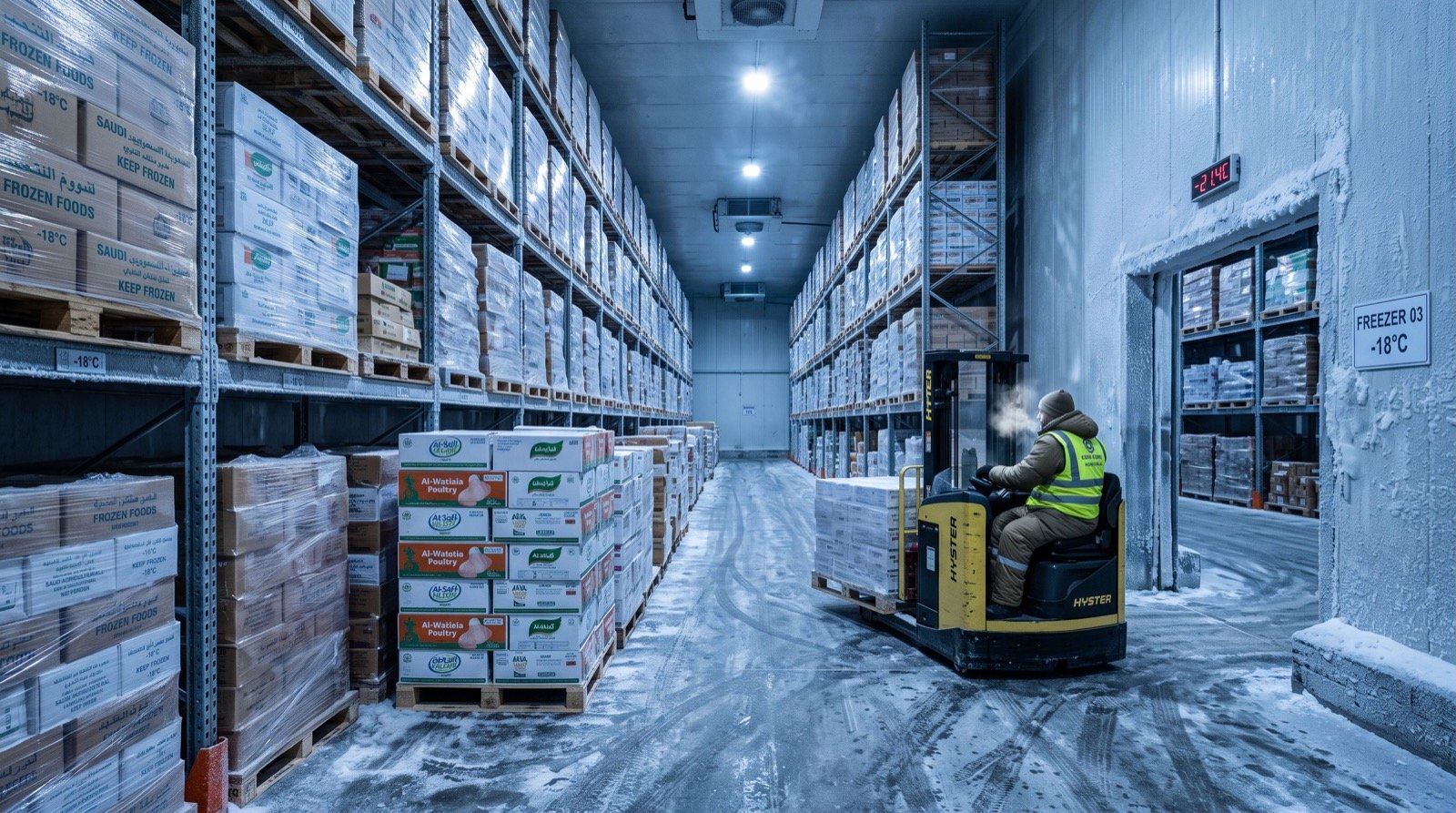
Choosing between Chilled Storage in Saudi Arabia and dry warehousing is one of the most consequential decisions a food distributor, pharmacy supplier, or retail importer will make in 2026. Get it wrong and you lose stock to spoilage, fail an audit, or pay for refrigeration capacity you never needed. Get it right and you cut waste, protect margins, and keep customers happy. This guide breaks down how chilled storage in Saudi Arabia actually works, when dry storage is the smarter call, and how to evaluate a facility before you sign a lease.
Why Chilled Storage in Saudi Arabia Is Different
The Kingdom’s climate is the first variable every operator underestimates. Ambient temperatures in Riyadh, Jeddah, and the Eastern Province regularly exceed 45°C for months at a time, which means any product sensitive to heat — dairy, fresh produce, certain pharmaceuticals, cosmetics — needs a controlled chain from the port or farm all the way to the shelf. A single break in that chain, even a 90-minute truck delay in July, can ruin a pallet of goods that looked fine on paper.
Facilities built for chilled storage in Saudi Arabia typically hold products between 2°C and 8°C, with insulated panel construction, redundant compressors, and continuous temperature logging. That logging matters more than most new importers expect, because retailers and regulators increasingly ask for digital proof, not a handwritten chart on a clipboard.
What Belongs in a Chilled Unit?
Dairy, fresh juice, deli meats, flowers, certain vaccines, and fresh-cut produce all need this temperature band. If your product label says “refrigerate after opening” or “keep below 8°C,” it belongs here — not in an air-conditioned dry room that merely feels cool to the touch.
When Dry Storage Is the Smarter Choice
Dry Storage solutions in Saudi Arabia cover a much wider range of goods: packaged snacks, rice, canned goods, cleaning supplies, electronics, textiles, and most spare parts. These products don’t need refrigeration, but they do need protection from humidity spikes, pests, and dust — all real risks in a Gulf warehouse that isn’t properly sealed and ventilated.
The economics matter too. Chilled and frozen capacity costs considerably more to build and run than dry space, so stacking slow-moving or non-perishable SKUs into a cold room is a common and expensive mistake. A good 3PL partner will segment your inventory first, then recommend a storage mix — rather than quoting one blanket rate for everything.
How Much Space Do You Actually Need?
Most first-time importers either overestimate or underestimate their required footprint. A simple rule that works in 2026: calculate your average 30-day inventory volume, add a 20% buffer for seasonal peaks (Ramadan and back-to-school periods spike demand across most FMCG categories), and only then negotiate a contract. Short-term flexible leases are increasingly available across Riyadh, Jeddah, and Dammam, so you rarely need to commit to a multi-year footprint before you understand your real volumes.
Comparing Chilled and Dry Storage at a Glance
| Factor | Chilled Storage | Dry Storage |
|---|---|---|
| Typical temperature range | 2°C – 8°C | Ambient, humidity-controlled |
| Best suited for | Dairy, produce, pharma, flowers | Packaged goods, electronics, spare parts |
| Relative cost per sq. metre | Higher | Lower |
| Energy monitoring needed | Continuous, logged | Periodic checks sufficient |
| Shelf-life risk if mismanaged | Hours to days | Weeks to months |
A Checklist Before You Sign a Storage Contract
- Ask for the facility’s temperature-logging history, not just a verbal assurance.
- Confirm backup power and how fast compressors recover after an outage.
- Check pallet-in, pallet-out turnaround times during peak season.
- Verify the facility’s proximity to your main distribution routes — Riyadh, Jeddah, and Dammam each serve different regional networks.
- Request references from existing clients in your product category.
Lease Terms and Hidden Costs to Watch For
The quoted rate per square metre is rarely the full story. Many contracts for chilled storage in Saudi Arabia bundle in extras that only show up on the first invoice: energy surcharges during peak summer months, forklift and labour fees for pallet handling, and minimum-stay penalties if you need to exit early after a seasonal demand drop. Ask for a full line-item breakdown before comparing two quotes, because a lower headline rate can easily end up costing more once surcharges are added.
It also pays to clarify who is responsible for product loss if a mechanical failure happens on the provider’s equipment rather than your own packaging or handling error. Some contracts quietly shift that liability onto the tenant unless you negotiate it upfront, which becomes a serious problem the first time a compressor fails during a heatwave.
How Do You Choose the Right Storage Partner?
This is the question almost every new client asks first, and it deserves a direct answer: visit the facility in person before signing anything. Photos and brochures can’t show you how a warehouse smells, how organised the racking is, or how staff respond when you ask an unscheduled question about their cooling backup plan. The same due-diligence applies outside of warehousing — when we researched how businesses vet marketing partners, we found the checklist for finding quality service providers was nearly identical: verifiable track record, transparent pricing, and references you can actually call.
For chilled storage in Saudi Arabia specifically, ask how the facility handles unplanned maintenance. Even top-tier compressors need servicing, and a provider without a documented contingency plan is a liability you’ll discover at the worst possible time — usually during a heatwave in August.
Freshness and Compliance Standards in 2026
Saudi regulators have tightened expectations around cold-chain traceability in recent years, in line with broader Gulf food-safety modernisation. The Saudi Food and Drug Authority publishes guidance on storage temperature ranges and documentation that importers and distributors are expected to follow, and inspectors increasingly request digital logs rather than paper records during site visits. Building this compliance into your storage contract from day one — rather than retrofitting it later — saves considerable cost and stress.
Frequently Asked Questions
What temperature range counts as chilled storage in Saudi Arabia?
Most chilled storage facilities operate between 2°C and 8°C, matching the requirements for dairy, fresh produce, and many pharmaceutical products. Always confirm the exact range against your specific product’s data sheet.
Is dry storage suitable for electronics and spare parts?
Yes, provided the facility controls humidity and dust. Electronics and most spare parts don’t need refrigeration but degrade quickly in damp or dusty conditions, so humidity control is the key specification to confirm.
How quickly can I scale storage space up or down?
Many providers in Riyadh, Jeddah, and Dammam now offer flexible short-term leases, which means you can scale capacity within weeks rather than committing to a multi-year contract before you know your real volumes.
What happens if a chilled facility loses power?
Reputable facilities maintain backup generators and insulated panels that hold temperature for a defined window even during an outage. Always ask for the documented recovery time before signing a contract.
Whether your business needs chilled storage in Saudi Arabia for fresh goods or dry storage for packaged inventory, the decision comes down to matching facility specifications to your actual product risk — not the cheapest quote on paper. Visit the site, check the compliance documentation, and confirm the contingency plans before you commit for 2026 and beyond.